

A stroke is a sudden medical emergency that demands immediate attention, presenting with abrupt, specific neurological symptoms. While fatigue develops gradually as a general sense of tiredness that improves with rest. Warning signs that point to stroke—not fatigue—include sudden facial drooping, weakness on one side of the body, slurred speech, vision problems, and a severe, sudden headache.
In acute ischemic stroke, untreated brain tissue undergoes rapid ischemic injury, resulting in the loss of approximately 1.9–2 million neurons, 13.8 billion synapses, and extensive axonal pathways per minute. [Source]
This underpins the principle of “time is brain,” which holds that delays in treatment directly correlate with greater neurological damage and poorer outcomes.
If there is even a slight doubt, seek immediate evaluation from Dr Rohit Mishra, a leading stroke doctor known for rapid diagnosis and emergency neurological care in Kolkata.
If you’re trying to figure out whether it is a stroke or just fatigue, this guide breaks down exactly how to tell the difference between them, and the symptoms you must never ignore.
Why Stroke Is Often Mistaken for Fatigue
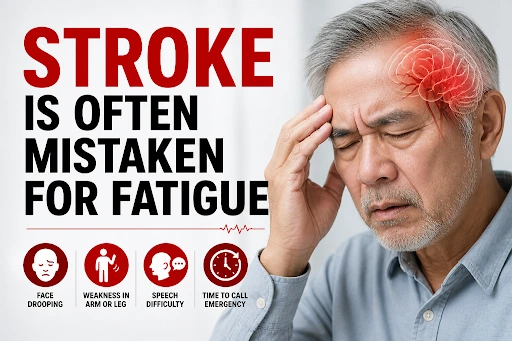
Stroke is often mistaken for fatigue because its early symptoms can be subtle and easily dismissed.
Sudden dizziness, confusion, limb heaviness, or weakness—along with headaches or nausea—are frequently attributed to stress, overwork, or a “bad day,” delaying recognition of a serious medical emergency.
How fatigue typically behaves
- Develops gradually over hours or days
- Improves with rest or sleep
- Affects the whole body evenly
- No changes in speech, vision, or coordination
How stroke symptoms appear
- Sudden and without warning
- Do not improve with rest
- Often affects one side of the body
- May involve speech, vision, or balance problems
[Stroke vs Fatigue: Quick Answer]
- Stroke symptoms are sudden, one-sided, and do not improve with rest
- Fatigue develops gradually, affects the whole body, and improves with rest
If symptoms are sudden or asymmetrical, treat it like a stroke. No debate.
What Exactly Is a Stroke?
A stroke is a medical emergency where blood flow to the brain is either blocked or interrupted by bleeding. Without oxygen, brain cells begin to die within minutes.
This loss of brain cells directly affects critical functions such as:
- Movement
- Speech
- Vision
- Memory
The longer the brain is deprived of oxygen, the greater the damage.
How Fast Does a Stroke Cause Damage?
| Time After Stroke Starts | What Happens in the Brain | Real-World Impact |
| 1 minute | (approx)1.9 million neurons die | Early functional loss begins |
| 10 minutes | Neural networks disrupted | Speech or movement affected |
| 1 hour | Significant brain damage | Higher disability risk |
| 3–4.5 hours | Critical treatment window | Best chance for reversal |
| Beyond 6 hours | Damage often permanent | Limited recovery potential |
Types of Stroke You Should Know
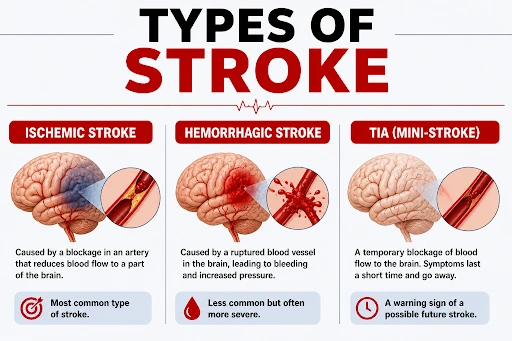
Dr Rohit Mishra, a leading stroke doctor in Kolkata, classifies strokes into three main types:
1. Ischemic Stroke (Most Common)
Caused by a blood clot blocking an artery in the brain.
2. Hemorrhagic Stroke
Occurs when a blood vessel ruptures, causing bleeding in the brain. Often more severe.
3. TIA (Mini-Stroke)
A temporary blockage that resolves on its own—but acts as a warning sign of a major stroke.
Note: A TIA is not harmless. But it’s your body telling you something bigger may be coming.
Stroke vs Fatigue: How to Tell the Difference Quickly
1. Onset
- Fatigue: Gradual
- Stroke: Sudden
2. Distribution
- Fatigue: Whole body
- Stroke: One side (face, arm, leg)
3. Associated Symptoms
- Fatigue: No neurological changes
- Stroke: Speech, vision, and balance issues
Red Flag Rule:
If symptoms are sudden, one-sided, or affect speech, vision, or coordination—assume stroke until proven otherwise.
In such cases, immediate medical evaluation from Dr Rohit Mishra, an experienced stroke doctor, is critical.
Early Signs of Stroke You Should Never Ignore
1. Face Drooping
One side of the face may droop or feel numb. Smiling becomes uneven.
2. Arm or Leg Weakness
Sudden loss of strength, especially on one side of the body.
3. Speech Difficulty
Speech may become slurred, slow, or difficult to understand.
4. Vision Problems
Blurred, dim, or complete loss of vision in one or both eyes.
5. Loss of Balance or Coordination
Dizziness, difficulty walking, or sudden imbalance.
6. Severe Headache
A sudden, intense headache with no known cause, especially in a hemorrhagic stroke.
Table: Subtle Stroke Signs Most People Miss
| Subtle Symptom | Why It’s Dangerous | Common Misinterpretation |
| Sudden mental fog | Early brain dysfunction | “I didn’t sleep well.” |
| Brief hand clumsiness | Motor control disruption | “Just weakness” |
| Momentary word-finding difficulty | Language centre affected | “I’m tired.” |
| Sudden mood change or irritability | Frontal lobe involvement | “Stress” |
| Mild imbalance | Cerebellar involvement | “Vertigo or fatigue” |
Use BE-FAST to Identify a Stroke in Seconds
- B – Balance: Sudden loss of balance
- E – Eyes: Vision problems
- F – Face: Drooping on one side
- A – Arms: Weakness or numbness
- S – Speech: Slurred or unclear
- T – Time: Act immediately
If even one of these signs appears, time is critical. Do not wait for symptoms to pass.
Immediately see Dr Rohit Mishra, an experienced cerebral stroke specialist and craniotomy neurosurgeon delivering critical, life-saving care for stroke patients.
Can Stroke Begin With Mild Symptoms Like Fatigue?
Yes—and this is where it becomes dangerous.
Some strokes begin subtly and are often dismissed as:
- Unusual tiredness
- Mild confusion
- Slight imbalance
These early signs are especially common in:
- Women
- Older adults
- Patients with underlying conditions
Timely consultation with Dr Rohit Mishra, a trusted cerebral stroke doctor in Kolkata, can make the difference between full recovery and long-term disability.
Table: High-Risk Profiles You Should Not Ignore
| Risk Profile | Why Risk Is Higher | What To Watch Closely |
| Hypertension patients | Damages blood vessels | Sudden headache, vision changes |
| Diabetics | Affects circulation | Numbness, confusion |
| Smokers | Increases clot formation | Sudden weakness |
| Sedentary lifestyle | Poor vascular health | Fatigue + imbalance combo |
| Age 45+ | Increased vulnerability | Any sudden neurological change |
What Is a Mini-Stroke (TIA) and Why You Should Never Ignore It
A Transient Ischemic Attack (TIA), or “mini-stroke,” is a serious warning that blood flow to the brain is temporarily disrupted and a major stroke may follow.
Around 20% of people who experience a TIA will have a stroke within 90 days, with nearly half of those occurring within the first 48 hours.
Therefore, a TIA must never be ignored. It must be treated as a medical emergency, as it offers a crucial window to prevent permanent disability or death.
Common TIA symptoms
- Brief weakness
- Temporary speech difficulty
- Short-lived vision loss
What Happens If You Ignore Stroke Symptoms?
- Permanent brain damage
- Loss of speech or mobility
- Long-term disability
- Increased risk of death
Table: What Immediate Treatment Can Actually Do
| Treatment Timing | Possible Outcome |
| Within 1 hour | High chance of full recovery |
| Within 3 hours | Significant damage reversal is possible |
| Within 4.5 hours | Eligible for clot-busting therapy |
| After 6 hours | Limited treatment options |
| Delayed care | Permanent disability risk rises sharply |
What To Do Immediately If You Notice Symptoms
1. Do Not Wait
Even if symptoms seem mild or temporary, act immediately.
2. Seek Emergency Medical Care
Reach a hospital or stroke specialist as fast as possible.
3. Note the Time
Doctors need to know when symptoms started to determine treatment options.
Quick action can significantly reduce brain damage and improve recovery.
Who Is at Higher Risk of Stroke?
Individuals with these conditions have a higher likelihood of stroke:
- High blood pressure
- Diabetes
- High cholesterol
- Smoking
- Increasing age
Important:
Stroke is no longer limited to older adults. Younger individuals are increasingly at risk due to:
- Stress
- Lifestyle factors
- Undiagnosed conditions
Sudden neurological symptoms at any age should never be ignored.
When Should You See Dr Rohit Mishra, a Stroke Doctor in Kolkata?
Seek immediate medical evaluation if:
- Symptoms are sudden and one-sided
- There is difficulty speaking or understanding speech
- Vision becomes blurred or lost
- Balance or coordination is affected
- You experienced a brief episode resembling a mini-stroke
Dr Rohit Mishra delivers precise diagnosis and timely stroke intervention at his Kolkata practice. He ensures patients receive rapid, expert care when it matters most.
Final Takeaway: When in Doubt, Treat It Like a Stroke
If symptoms appear suddenly, affect one side of the body, or disrupt speech, vision, or balance—do not second-guess it.
Assume it is a stroke and act immediately. Recognising early stroke symptoms and responding fast can save brain function, independence, and life itself.
If you or someone around you shows even one warning sign, seek immediate evaluation. For expert diagnosis and urgent care, consult Dr Rohit Mishra, a leading stroke doctor in Kolkata.
Schedule an appointment today.
People Also Ask
Can stroke symptoms come and go?
Yes. Some stroke symptoms may appear briefly and disappear within minutes or hours. This can happen during a Transient Ischemic Attack (TIA or mini-stroke), which is an important warning sign of a possible major stroke.
Can dehydration or exhaustion mimic a stroke?
Severe dehydration, heat exhaustion, or extreme fatigue may cause dizziness or confusion, but they usually do not cause sudden one-sided weakness, facial drooping, or speech difficulty, as seen in stroke.
How long do stroke symptoms usually last?
Stroke symptoms can persist for hours, days, or become permanent without treatment. Even temporary symptoms require emergency evaluation because early treatment greatly improves recovery chances.
Can younger adults have a stroke?
Yes. Stroke is increasingly seen in younger adults due to factors such as high stress, smoking, hypertension, diabetes, obesity, and sedentary lifestyles.
Is dizziness alone always a sign of stroke?
Not always. However, sudden dizziness accompanied by imbalance, vision changes, slurred speech, or weakness may indicate a stroke and should never be ignored.
Why is early stroke treatment so important?
Brain cells begin dying within minutes after a stroke starts. Faster treatment can reduce brain damage, improve recovery, and lower the risk of long-term disability.