
Spine Lumbar Scoliosis Treatment in Kolkata
Overview
Lumbar scoliosis is characterised by an abnormal sideways curvature and rotation of the spine in the lower back (lumbar region). A healthy spine has a natural front-to-back curve, but scoliosis causes a C- or S-shaped bend with a minimum 10-degree Cobb’s angle measurement. This curvature can range from mild to severe, and in severe cases, it can impact posture, cause discomfort, and potentially affect other organs. Seek medical attention from Dr. Rohit Mishra, a renowned scoliosis correction doctor in Kolkata, for advanced scoliosis treatments.
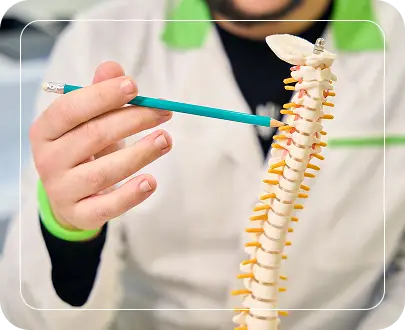
Types of Spine Lumbar Scoliosis
Common backbone injuries are:
-
Idiopathic scoliosis
It is the most common type that appears during adolescence with no apparent cause.
-
Congenital scoliosis
A rare condition that presents from birth due to abnormal vertebral formation during fetal development.
-
Neuromuscular scoliosis
Related to muscle or nerve disorders such as cerebral palsy or muscular dystrophy, leading to weak spinal support.
-
Degenerative scoliosis
Also called adult-onset scoliosis develops due to age-related spinal wear, leading to pain and mobility issues.
-
Nonstructural scoliosis
Muscle spasms, leg length differences, or other reversible factors cause a temporary but postural curvature.
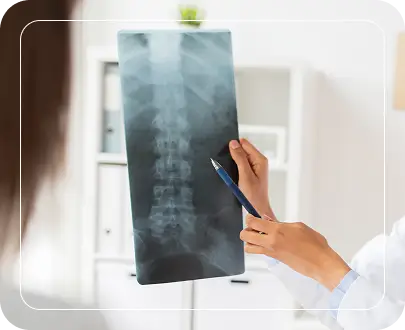
Signs that you need a Spine Lumbar Scoliosis

Uneven shoulders or hips
Uneven shoulders or hips

Visible spinal curvature
Visible spinal curvature

A prominent rib hump
A prominent rib hump

One leg appears shorter than the other
One leg appears shorter than the other

Less vertical height due to disc desiccation
Less vertical height due to disc desiccation

Back/neck pain or stiffness that worsens with activity
Back/neck pain or stiffness that worsens with activity

Nerve-related symptoms like numbness or weakness in the legs
Nerve-related symptoms like numbness or weakness in the legs

Difficulty standing straight
Difficulty standing straight

Visible spine curve when bending forward
Visible spine curve when bending forward

Changes in walking pattern
Changes in walking pattern

Breathing difficulties in severe cases
Breathing difficulties in severe cases

Fatigue & headache
Fatigue & headache

Low mobility

Low mobility

Book an appointment today
Causes & Risk Factors of Spine Lumbar Scoliosis
- Family history of scoliosis
- Age-related spinal degeneration
- Genetic conditions (e.g., Marfan, Ehlers-Danlos)
- Neuromuscular disorders (e.g., cerebral palsy)
- Inborn spine deformities
- Poor posture and prolonged sitting
- Previous spine surgery or trauma
- Spinal infections or tumours
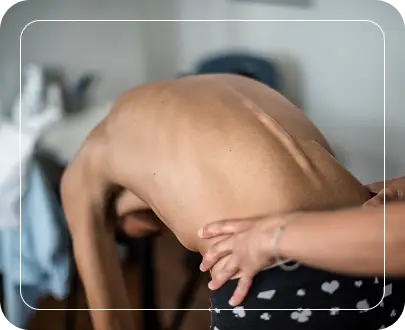
Diagnosis of Spine Lumbar Scoliosis

Physical examination
Physical examination

Assessment of posture and shoulder symmetry
Assessment of posture and shoulder symmetry

Scoliosis X-rays
Scoliosis X-rays

CT scans
CT scans

MRI Scans
MRI Scans

Neurological assessment
Neurological assessment

Adam's Forward Bend Test (if necessary)

Adam's Forward Bend Test (if necessary)
Types of Scoliosis surgery
Dr. Rohit Mishra specialises in spine lumbar scoliosis surgery in kolkata along with:
- Scoliosis brace treatment
- Spinal fusion surgery
- Spinal fusion
- Vertebral body tethering
- Thoracoplasty
- Expandable rod
- Magnetic control growing rod (Magec rod)
- Medications
Frequently Asked Questions
Can lumbar scoliosis get worse with age?
Yes. If left untreated, spinal curvature may progress 1-2 degrees annually in adults. Regular monitoring and early intervention are recommended to manage this progression effectively.
Can scoliosis cause paralysis?
While rare, severe scoliosis can compress the spinal cord, potentially leading to neurological issues, including paralysis. Discuss your concern with Dr. Mishra about early treatment for adult scoliosis and adolescent idiopathic scoliosis (AIS).
Can exercise cure scoliosis?
Not completely. Exercise can help improve flexibility and strength but cannot fix the structural curve of scoliosis
Can scoliosis affect organ function?
In severe cases, where the spinal curve's Cobb angle measurement exceeds 40 degrees or more, scoliosis curvature may affect lung function and make breathing difficult.
How effective is spinal fusion for scoliosis?
Spinal fusion is highly effective in stabilising the spine and preventing further curvature. In extreme cases, it reduces pain, improves posture, and enhances mobility. Recovery varies depending on individual health conditions and other factors, but most patients experience long-term relief.