
Backbone Injury Surgeon in Kolkata
- Head of Neurosurgery, Charnock Hospital
- 1,850+ spine surgeries performed
- Specialised care for neurological and spinal conditions
Home / Treatments / Backbone Injury

Need a Neurosurgical Opinion?
Discuss your symptoms, scans or treatment options with Dr Rohit Mishra.
Get In Touch +91 91473 80550Other Treatments
At a glance
Must-Know Facts
Can backbone injuries affect movement?
Yes. Depending on severity, injuries may affect movement, sensation and coordination.
Can backbone injuries require surgery?
Some injuries require surgical evaluation, while others may be managed without surgery.
When should a backbone injury be evaluated?
Persistent pain, weakness, numbness, or movement difficulties require medical assessment.
Can backbone injuries cause permanent damage?
Yes. Severe trauma can lead to long-term nerve impairment, chronic pain, or lasting changes to mobility and physical function.
Behind Everyday Back Discomfort
What Is a Backbone Injury?
Commonly referred to as spinal cord injury (SCI)) it involves damage to the spinal column—the vertebrae, ligaments, or discs—or to the delicate bundle of nerve fibres running through it that connects your brain to the rest of your body.
Lesser-Known Backbone Injuries
- Vertebral fractures may affect spinal stability.
- Spinal cord injuries may affect neurological function.
- Disc injuries may cause nerve compression.
- Ligament injuries may affect spinal support.
Why Expertise Matters
- Spinal injuries may affect movement and sensation.
- Injury severity determines treatment requirements.
- Neurological assessment helps evaluate spinal function.
- Treatment depends on injury location and severity.
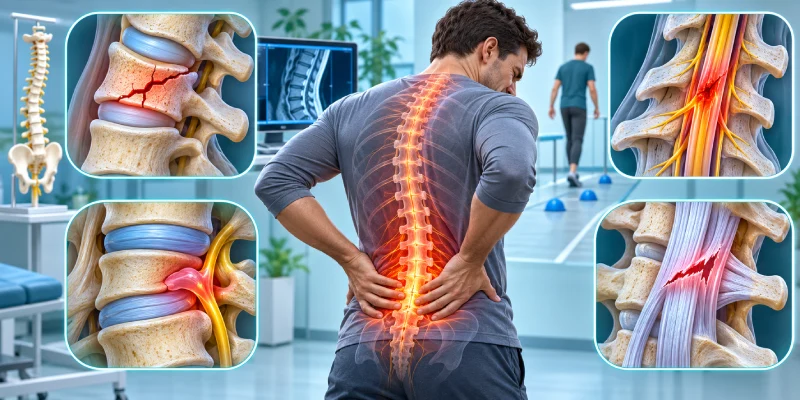
Every Discomfort Tells A Story
Types of Backbone Injuries
Spinal Column Injury
The overarching category for damage to the bones, discs, and tissues that protect the central nerves.
Vertebral Fractures
Bone breaks ranging from minor cracks to severe structural failures within the main column.
Compression Fractures
Vertical collapse of the anterior bone body, most typically occurring in the lower back.
Burst Fractures
High-impact trauma where a segment shatters completely due to an axial crushing force.
Flexion-Distraction
Chance fractures are caused by violent forward-bending forces that tear bone and rear ligaments.
Subluxations
Partial structural misalignments where segments shift out of place without fully dislocating.
Facet Joint Dislocations
Locking of small stabilising connectors, causing acute, severe column instability and deformity.
Spondylolisthesis
A distinct structural defect where one bone slips forward over the segment below.
Soft Tissue Damage
Acute, painful trauma specifically affecting supporting back muscles, tendons, or nearby ligaments.
Herniated Discs
Displaced internal cushioning material that actively protrudes and pinches nearby nerve roots.
Spinal Cord Contusion
Direct bruising of the central bundle, causing immediate swelling and neurological dysfunction.
Recognising Changes That Matter
Signs You May Need Surgery For Backbone Injury
Backbone injuries may affect movement, sensation, and spinal stability. Recognising symptoms after an injury can help identify when medical evaluation is needed.
Common Symptoms
- Persistent back or neck injury pain, sharp or dull
- Pain intensifies with bending, lifting, coughing, sneezing or laughing
- Pain radiating to the arms or legs
- Sporadic pain that appears and disappears
- Morning stiffness upon waking
- Difficulty walking or maintaining balance
- Numbness or tingling in limbs
- Loss of sensation
- Muscle weakness or reduced movement
- Difficulty standing or walking
Myth vs Fact
| Myth | Fact |
|---|---|
| “Every backbone injury causes immediate symptoms” | Symptoms can vary depending on injury severity. |
| “Backbone injuries only affect the back” | Some injuries may affect movement and sensation. |
| “Every backbone injury requires surgery” | Treatment depends on injury type and severity. |
Red Flags: Don't Wait
- Loss of bowel or bladder control
- Saddle anaesthesia or numbness in groin and buttocks
- Progressive weakness in legs or arms
- Foot drop or inability to lift the foot
- Severe, unremitting pain despite rest
- Fever or chills accompanying back pain
- Unexplained weight loss accompanying back pain
Hidden Injury Triggers
Causes and Risk Factors of Backbone Injuries
Backbone injuries may result from trauma, fractures, or damage to spinal structures. The nature and severity of an injury affect evaluation and treatment needs.
Main Causes
- Spine trauma.
- High-velocity impacts.
- Falls.
- Vehicle accidents.
- Sports injuries.
- Workplace accidents.
- Heavy lifting.
- Arthritis or osteoporosis (weakening of the bones).
- Sudden impact causing spinal column injury.
- Tumours or infections affecting the spine.
- Poor sitting posture.
- Chronic stress.
- Being overweight.
- Being extremely tall.
Factors Influencing Surgical Requirements
- Location and severity of injury - The exact site and extent of spinal damage help surgeons determine the safest approach.
- Spinal structural instability - When the spine cannot support body weight safely, surgical stabilisation prevents further mechanical damage.
- Vertebral fracture involvement - Severe or displaced bone fractures often require surgery to realign and protect the spine.
- Possible spinal cord involvement - Direct pressure on the spinal cord demands prompt surgical relief to prevent permanent damage.
- Neurological symptoms and functional changes - Progressive weakness, numbness, or loss of control strongly indicate the need for surgical intervention.
The Risks of Delaying
Complications of Untreated Backbone Injuries
Backbone injuries may affect spinal stability and neurological function. Possible complications depend on the injury's location and severity.
Permanent Paralysis
- Tetraplegia or paraplegia
- Loss of movement
- Reduced independence
Cauda Equina Syndrome
- Severe lower-limb weakness
- Saddle region numbness
- Bowel or bladder dysfunction
Nerve Damage and Chronic Pain
- Persistent neuropathic pain
- Burning and tingling sensations
- Permanent sensory loss
Loss of Bowel and Bladder Control
- Urinary retention
- Accidental urinary incontinence
- Loss of bowel control
Cardiovascular and Autonomic Issues
- Blood pressure fluctuations
- Orthostatic hypotension
- Autonomic dysreflexia episodes
Respiratory Complications
- Weakened breathing muscles
- Chronic breathing difficulties
- Increased pneumonia risk
Circulatory and Clot Risks
- Deep vein thrombosis
- Increased blood clotting
- Pulmonary embolism risk
Pressure Sores and Skin Breakdown
- Reduced skin sensation
- Pressure-related skin ulcers
- Increased infection risk
Secondary Bone and Muscle Decline
- Muscle atrophy
- Increased muscle spasticity
- Localised bone loss
Spinal Tuberculosis (Pott’s Disease)
- Vertebral destruction
- Spinal abscess formation
- Severe skeletal deformity
Degenerative Worsening
- Permanent spinal deformity
- Severe spinal instability
- Complex surgical requirements
Mental Health and Dependency
- Chronic anxiety
- Social isolation
- Clinical depression
Surgical Safety Explained
Is Surgery Safe For Backbone Injury?
Dr Rohit Mishra, as a backbone injury surgeon in Kolkata, will explain every risk and expected result based on the injury type, severity, and spinal involvement.
| Possible Risk | How It Is Reduced |
|---|---|
| Incorrect assessment of injury | Medical history and physical examination. |
| Undetected spinal damage | Imaging through X-rays, MRI, or CT scans. |
| Nerve-related complications | Neurological examination and nerve assessment. |
| Treatment-related complications | Treatment decisions based on injury severity. |
Clarity Through Clinical Assessment
Diagnosis of Backbone Injuries
Accurate diagnosis helps identify spinal damage and assess injury severity. Evaluation may include:
- Physical examination to assess pain, mobility and reflexes
- X-rays to detect fractures or misalignment
- MRI/CT scans for detailed imaging of the spine and nerves
- Pain pattern analysis
- Medical history review
- Failed response to physiotherapy
Focused Care, Surgical Precision
Effective Backbone Injury Surgeries
Dr Rohit Mishra, as a leading backbone injury treatment doctor in Kolkata, performs surgery for severe fractures or spinal cord compression.
Discectomy
Discectomy removes damaged or herniated disc material to relieve pressure on spinal nerves and reduce associated symptoms.
Laminectomy
Laminectomy removes part of the vertebral bone to create space and relieve spinal cord or nerve compression.
Spinal Fusion
Spinal fusion permanently joins two or more vertebrae to improve stability and address spinal instability.
Artificial Disc Replacement
Artificial disc replacement substitutes a damaged spinal disc with an artificial implant while preserving movement.
Vertebroplasty/Kyphoplasty
These procedures stabilise vertebral compression fractures with bone cement, and kyphoplasty involves balloon-assisted restoration of vertebral height.
Minimally Invasive Procedures
Arthroscopic discectomy and microdiscectomy use smaller incisions to remove damaged disc material and relieve nerve pressure.
What Comes After Diagnosis
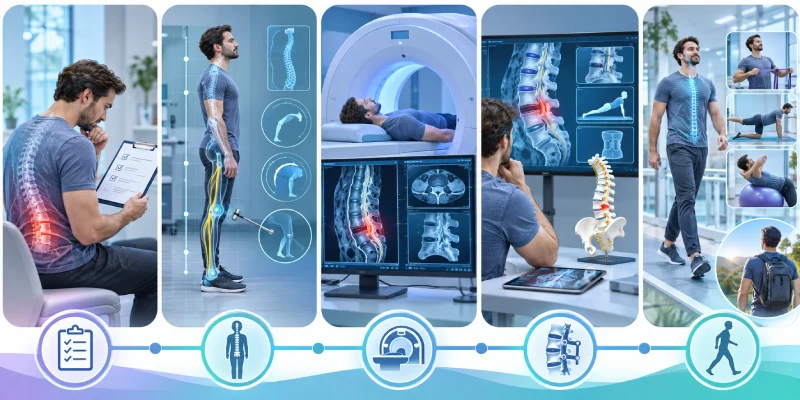
Your Backbone Injury Treatment Journey—Step-by-Step
-
Initial Consultation
Review of complete injury history, active symptom tracking, and assessment of primary spinal health concerns.
-
Clinical Evaluation
Physical assessment of structural spinal alignment, joint mobility, reflexes, and potential nerve compression.
-
Diagnostic Imaging
Advanced radiographic imaging, including X-rays, high-resolution CT scans, or MRIs to pinpoint structural damage.
-
Treatment Planning
Formulation of personalised clinical pathways ranging from conservative therapies to targeted precision surgical interventions.
-
Rehabilitation and Follow-Up
Continuous monitoring of recovery through structured rehabilitation, progressive strengthening, and routine clinical evaluation checkups.
The Road to Healing
Recovery Timeline After Backbone Injury Surgery
Recovery varies depending on injury severity, treatment, and individual progress.
-
Days 1–4
Medical CarePain meds; early PT walking.
Symptoms & RestrictionsHigh pain; no bending/twisting.
-
Weeks 1–6
Medical CareWound check; gradual PT.
Symptoms & RestrictionsSoreness; light work; no lifting.
-
Months 2–12
Medical CareAdvanced strength PT.
Symptoms & RestrictionsNerve healing; return to sports.
Answers to Common Queries
Frequently Asked Questions
Does back pain always originate from muscles or the spine?
No. Discomfort can stem from pinched nerves, strained ligaments, inflamed joints, or referred pain from internal organs like kidneys.
Is bed rest recommended for back pain recovery?
No. Prolonged immobility causes stiffness and weakens supporting muscles. Gentle activity, including light walking, supports recovery.
Are older adults the only ones affected by back pain?
No. People of all ages experience back pain. Younger individuals may develop symptoms from sports injuries, heavy lifting, or prolonged sitting.
Does cracking your back increase arthritis risk?
No. Joint popping does not necessarily damage the skeleton. Seek medical evaluation if cracking causes immediate soreness or swelling.
Should physical activity be avoided during back pain?
No. Prolonged inactivity can cause deconditioning. Modify daily activities to maintain mobility without overexertion.