
DREZ Lesioning Surgeon In Kolkata
- 1,850+ spine surgeries performed
- Specialised evaluation for chronic nerve-related pain
- Surgical treatment for selected pain conditions
Home / Treatments / DREZ Lesioning

Need a Neurosurgical Opinion?
Discuss your symptoms, scans or treatment options with Dr Rohit Mishra.
Get In Touch +91 91473 80550Other Treatments
At a glance
Must-Know Facts
Can DREZ lesioning help manage chronic nerve pain?
Yes, selected patients may experience relief through targeted pain-pathway intervention.
Is DREZ lesioning considered first-line treatment?
No, it is typically considered when other treatments provide insufficient relief.
Which conditions may require DREZ lesioning?
Selected brachial plexus injuries or spinal cord-related pain may warrant evaluation.
Does DREZ lesioning guarantee pain relief?
No, outcomes depend on injury severity, clinical findings, and individual response.
A Closer Look
What Is DREZ Lesioning?
Also known as DREZ rhizotomy, it is a surgical procedure targeting the spinal cord's Dorsal Root Entry Zone (DREZ). This area plays a crucial role in transmitting pain signals to the brain. The procedure aims to disrupt these pain signals, offering relief for specific chronic pain conditions.
Main Characteristics
- Destroys hyperactive pain pathways.
- Treats severe neuropathic pain.
- Targets specific spinal segments.
- Minimises central signal transmission.
Why Expertise Matters
- Neurosurgeons locate precise targets.
- Micro-mapping protects healthy tissue.
- Experts prevent permanent deficits.
- Specialists evaluate patient eligibility.
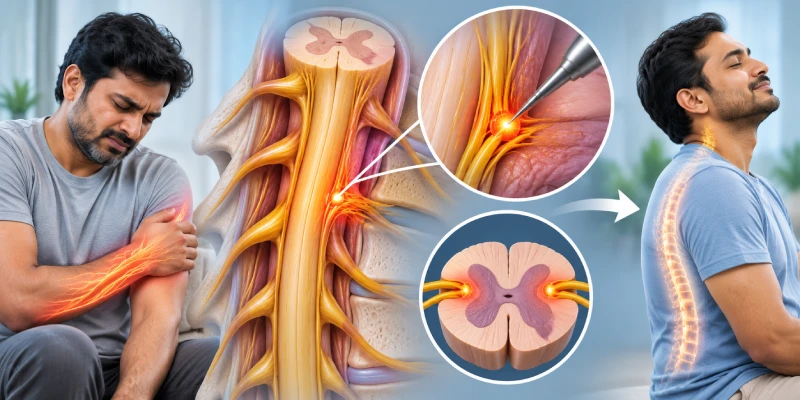
Every Pain Condition Has a Cause
Types of Conditions Evaluated for DREZ Lesioning
Several neurological injuries and chronic pain conditions may be evaluated for DREZ lesioning. The procedure is not suitable for every type of pain.
Brachial Plexus Avulsion
Relentless burning or crushing pain following traumatic tearing of arm nerve roots from the spinal cord.
Lumbosacral Plexus Avulsion
Traumatic nerve tearing in the lower spine causing severe neuropathic pain in the pelvis and legs.
Segmental Spinal Cord Injury Pain
Severe, girdle-like shooting or burning pain localised right at the boundary of a spinal injury.
Cauda Equina Injuries
Traumatic damage to lower spinal nerve bundles causing severe saddle-distribution and lower extremity nerve pain.
Postherpetic Neuralgia
Persistent, devastating nerve pain following a shingles infection that resists standard medications and nerve blocks.
Phantom Limb Pain
Refractory pain felt in an amputated limb secondary to nerve avulsion or proximal root damage.
Chronic Focal Cancer Pain
Intractable localised pain caused by direct malignant tumour infiltration or compression of spinal nerve roots.
Hyperspastic States
Severe localised muscle spasms treated by selectively cutting pain and spasticity fibres using Sindou's technique.
Recognising Persistent Pain Symptoms
Signs and Symptoms That May Require Evaluation
Persistent neuropathic pain can affect physical activity, sleep, and everyday functioning. Symptoms alone do not determine whether DREZ lesioning is appropriate.
Common Symptoms
- Burning, stabbing, or electric shock-like sensations.
- Intractable pain worsening despite maximum medication.
- Chronic nerve pain triggered by light touch.
- Relentless phantom limb pain after amputation.
- Severe radiating pain into a paralysed arm.
- Devastating nerve pain following a shingles infection.
- Neuropathic pain severely impacting daily life.
- Persistent muscle spasms, cramps, or spasticity.
Myths vs Facts
| Myth | Fact |
|---|---|
| “DREZ lesioning eliminates all pain immediately” | It targets specific spinal pathways but may not eliminate all pain. |
| “Anyone with chronic sciatica should request it” | It is reserved for selected severe conditions, including brachial plexus avulsions. |
| “Surgery guarantees permanent, risk-free relief” | Pain may recur, with risks including permanent numbness or weakness. |
Red Flags: Don't Wait
- Rapidly progressive weakness in your limbs.
- Sudden loss of bowel or bladder control.
- Swiftly spreading numbness in the groin area.
- Acute difficulty walking or severe balance loss.
- Complete loss of motor function or paralysis.
- New, sudden onset of unmanageable spinal pain.
Hidden Injury Triggers
Causes and Risk Factors of Chronic Neuropathic Pain
Chronic neuropathic pain may develop following nerve injuries, spinal cord damage, or disrupted sensory pathways. DREZ lesioning may be considered in selected cases when other treatments fail.
Main Causes
- Brachial plexus avulsion.
- Spinal cord injuries.
- Traumatic nerve damage.
- Nerve-root injuries.
- Herpetic nerve damage.
- Persistent sensory pathway disruption.
- Phantom limb pain.
- Certain cancer-related pain conditions.
Factors Influencing Surgical Requirements
- Severity of persistent pain.
- Underlying neurological injury.
- Previous treatment response.
- Pain location and distribution.
- Overall neurological function.
The Risks of Delaying
Complications of Not Undergoing DREZ Lesioning
Persistent neuropathic pain may interfere with everyday activities, sleep, and physical functioning. Its effects depend on the underlying neurological condition.
Worsening Central Sensitisation
- The spinal cord becomes hyper-reactive.
- Mild touches trigger pain.
- Nerve damage becomes permanent.
Severe Muscle Wasting
- Pain prevents limb movement.
- Muscles shrink from disuse.
- Joints stiffen and lock.
Loss of Independence
- Daily tasks become impossible.
- Basic self-care requires assistance.
- Mobility declines significantly over time.
Chronic Sleep Fragmentation
- Severe pain interrupts rest.
- Deep sleep is blocked.
- Daytime exhaustion degrades focus.
Profound Psychological Distress
- Unremitting pain drives depression.
- Anxiety and hopelessness increase.
- Social isolation frequently occurs.
Surgical Safety Explained
Is DREZ Lesioning Safe?
Dr Rohit Mishra, a neurosurgeon in Kolkata, will explain the potential risks of DREZ lesioning ( rhizotomy) and their management, considering your underlying condition, procedure, and individual clinical needs.
| Surgical Risk | Reduction & Management |
|---|---|
| Infection | Sterile surgical techniques and wound care. |
| Bleeding | Careful surgical monitoring and management. |
| Motor Weakness | Neurological assessment and postoperative monitoring. |
| Sensory Changes | Neurological evaluation and follow-up. |
| Persistent or Worsened Pain | Careful patient selection and pain assessment. |
| Spinal Cord Injury | Specialist surgical planning and monitoring. |
Clarity Through Clinical Assessment
Diagnostic Tests Before DREZ lesioning
Before considering the procedure, Dr Rohit Mishra recommends clinical assessment and diagnostic investigations to map spinal anatomy, pinpoint the precise area of nerve damage, assess spinal stability, and ensure your body is healthy enough to safely undergo general anaesthesia and major spinal surgery.
- Magnetic Resonance Imaging (MRI)
- CT Myelogram
- Spinal X-rays
- Electromyography (EMG)
- Nerve Conduction Studies (NCS)
- Comprehensive Neurological Exam
- Blood and Urine Tests
- Electrocardiogram (ECG/EKG)
- Chest X-ray
Focused Care, Surgical Precision
Your DREZ Lesioning Surgery Journey—Step-by-Step
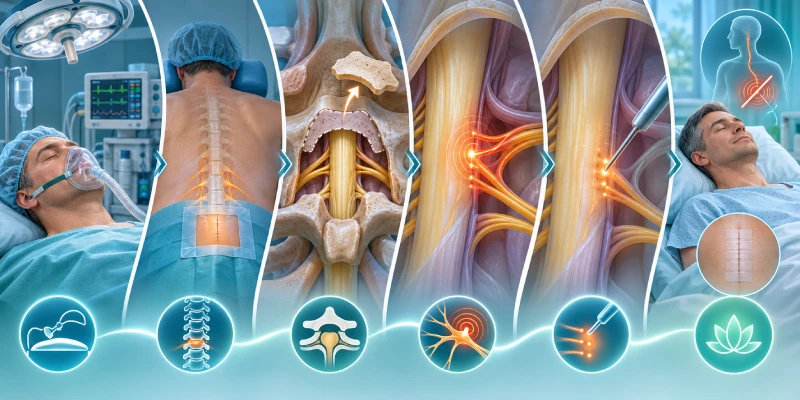
DREZ lesioning involves careful evaluation, surgical planning, specialised neurosurgery, and postoperative monitoring. The process depends on the underlying neurological condition and individual clinical needs.
-
Anaesthesia
General anaesthesia keeps the patient asleep and comfortable throughout surgery.
-
Access
The surgeon makes an incision over the spine near the affected nerve roots.
-
Laminectomy
A portion of the vertebra is removed to expose spinal cord structures.
-
Identifying the Target
The surgeon identifies damaged dorsal root entry zones associated with pain.
-
Creating Lesions
Precise instruments create tiny lesions within targeted dorsal root entry zones.
-
Closure
The surgeon closes the surgical incision carefully using layered sutures.
The Road to Healing
Recovery Timeline After DREZ Lesioning
Recovery after DREZ lesioning varies according to the underlying condition, surgical procedure, and individual progress.
-
In-Hospital First 5–7 Days
Core Focus & ActivityManaging acute surgical pain and navigating temporary unsteadiness/weakness.
-
Early 2 Weeks–2 Months
Core Focus & ActivityLight activities allowed; strict no bending/lifting/twisting; gradual nerve pain relief.
-
Long-Term Several Months
Core Focus & ActivityFull functional recovery, active physical therapy, and ongoing nerve healing.
Answers to Common Queries
Frequently Asked Questions
Does DREZ leave limbs completely numb?
No. It targets selective pain pathways, though altered sensation or localised numbness frequently occurs in the treated dermatomal region.
Does DREZ lesioning cause paralysis?
No. Permanent loss of motor function is rare because neurosurgeons carefully avoid the ventral roots and main descending tracts.
Does DREZ treat phantom limb pain only?
No. This neurosurgical procedure also effectively addresses severe discomfort from brachial plexus avulsions, spinal cord injuries, and post-herpetic neuralgia.
Can DREZ cure all future nerve pain?
No. The intervention addresses only targeted damaged pathways and cannot prevent future injuries or treat neuropathic conditions elsewhere.
Is recovery from DREZ surgery one week?
No. Healing from this major spinal operation and the accompanying laminectomy typically requires several weeks to months of rehabilitation.