
Transsphenoidal Surgeon in Kolkata
- 950+ brain surgeries performed
- Head of Neurosurgery Department, Charnock Hospital
- Expertise in transsphenoidal surgery
Home / Treatments / Transsphenoidal Surgery

Need a Neurosurgical Opinion?
Discuss your symptoms, scans or treatment options with Dr Rohit Mishra.
Get In Touch +91 91473 80550Other Treatments
At a glance
Must-Know Facts
What Happens During Transsphenoidal Surgery?
It extracts skull-base growths by entering through the nasal passages.
Can Transsphenoidal Surgery Affect Vision?
Yes, it can relieve blurriness or rarely cause nerve damage.
Does Transsphenoidal Surgery Always Require External Incisions?
No, the tools typically reach the target area through the nostrils.
When Should Transsphenoidal Surgery Be Evaluated?
When you have abnormal hormone levels, severe headaches, or blurred vision.
Knowing the approach
What Is Transsphenoidal Surgery?
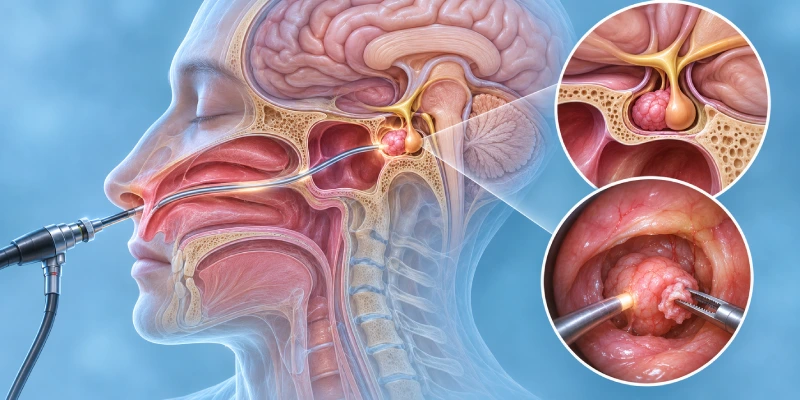
Transsphenoidal conditions involve pituitary gland or skull-base tumours accessible through the nasal passages and sphenoid sinus. This minimally invasive approach allows surgeons to remove tumours and other lesions from the pituitary gland and surrounding skull base areas by reaching them through the nasal passages and the sphenoid sinus, rather than opening the skull.
How Is It Performed?
- Approach: Access through natural nasal passages.
- Visualisation: Endoscopic or microscopic magnified surgical views.
- Team Effort: Neurosurgeon and ENT surgeon collaborate.
- No External Scars: No visible facial incisions
Why Neurosurgical Expertise Matters
- Tumour Mapping: Evaluates mass size and location.
- Neurological Assessment: Examines surrounding brain structures.
- Surgical Considerations: Identifies critical operative constraints.
- Approach Selection: Determines the best entry path
Recognising Changes That Matter
Signs You May Need Transsphenoidal Surgery
Pituitary tumours may cause symptoms by affecting surrounding structures, hormone production, or vision. Symptoms vary depending on tumour size, location, and hormonal activity.
Common Symptoms
- Persistent or worsening headaches.
- Blurred or double vision.
- Hormonal changes, fatigue, or weight gain.
- Nausea and vomiting from increased brain pressure.
- Reduced libido due to hormonal disruptions.
- Reduced peripheral vision.
- Unexplained fatigue or weakness.
Red Flags: Don't Wait
- Rapid or severe vision changes.
- Persistent, severe, or worsening headaches.
- Sudden nausea, vomiting, confusion, or seizures.
- Continuous watery nasal discharge.
- Extreme weakness, low blood pressure, or altered consciousness.
Understanding What Increases Risks
Causes and Risk Factors Transsphenoidal Conditions
Conditions requiring transsphenoidal intervention—most commonly pituitary adenomas, craniopharyngiomas, Rathke's cleft cysts, and meningiomas—develop from specific cellular and genetic alterations.
Main Causes
- Sporadic genetic mutations damage cellular DNA.
- Inherited endocrine syndromes trigger tumour formation.
- Family histories increase overall biological risk.
- Adult ageing increases clinical diagnosis rates.
- Abnormal cellular replication drives tissue growth.
- Embryonic cell remnants form specific cysts.
Factors Influencing Treatment Requirements
- Tumour size dictates immediate clinical management.
- Hormone secretion levels require chemical control.
- Optic nerve compression threatens patient vision.
- Serial growth rates guide surgical timing.
- Patient age affects overall recovery capacity.
- Systemic health status influences anaesthesia safety.
The Risks of Delaying
Complications of Untreated Transsphenoidal Conditions
Leaving these sellar and pituitary conditions untreated or unmonitored can lead to severe neurological, visual, and body-wide metabolic complications due to tumour growth (mass effect) or extreme hormonal imbalances.
Vision Loss & Neurological Pressures
- Permanent tunnel vision.
- Double vision occurrences.
- Severe, chronic headaches.
Severe Hormonal Deficiencies (Hypopituitarism)
- Dangerous adrenal crisis.
- Sluggish thyroid function.
- Disrupted reproductive systems.
Metabolic & Systemic Diseases (Functioning Tumours)
- Severely high cortisol.
- Abnormal bone growth.
- Excessive prolactin levels.
Pituitary Apoplexy (An Emergency)
- Sudden internal bleeding.
- Abrupt complete blindness.
- Rapid cardiovascular collapse.
Surgical Safety Explained
Is Transsphenoidal Surgery Safe?
Dr Rohit Mishra, a transsphenoidal surgeon in Kolkata, evaluates tumour size, location, hormonal activity, neurological involvement, and overall health before discussing appropriate surgical treatment options.
| Surgical Risk | Reduction & Management |
|---|---|
| Infection | Surgical wound and infection assessment. |
| Bleeding | Blood loss and vascular considerations. |
| Cerebrospinal fluid (CSF) leak | Skull base and surgical closure assessment. |
| Hormonal changes | Pituitary function and hormone monitoring. |
| Visual complications | Optic structures and neurological assessment. |
| Persistent symptoms | Underlying tumour characteristics and postoperative evaluation. |
Clarity Through Clinical Assessment
Diagnosis of Pituitary Tumours
Dr Rohit Mishra evaluates symptoms, medical history, hormonal findings, and imaging results to assess pituitary tumours and determine appropriate treatment.
- MRI or CT Scans: Identify tumour size and location.
- Hormone & Blood Tests: Measure hormone levels and production.
- Ophthalmologic Evaluation: Check peripheral vision and nerves.
- Physical & Neurological Examination: Assess overall health and reflexes
Understanding Different Approaches
Types of Transsphenoidal Surgery
Surgery involves different surgical approaches depending on tumour size, location, complexity, and accessibility. These approaches use specialised techniques to access the pituitary gland.
Traditional (Endonasal)
Accesses the pituitary gland through the nose, avoiding external incisions, and treats most benign tumours.
Endoscopic
Uses a camera-equipped endoscope for better visualisation and guidance, particularly for small to medium-sized tumours.
Microscopic
Uses a microscope to magnify tumours, improving precision when removing larger or complex pituitary tumours.
With Extended Approach
Removes part of the bone or uses advanced tools to access larger or difficult-to-reach tumours.
Robotic-Assisted Approach
Uses robotic assistance to enhance surgical precision and control, particularly during complex or high-risk procedures.
Hybrid Approach (Combination of Endoscopic and Microscopic Techniques)
Combines endoscopic and microscopic techniques to improve visualisation and magnification during pituitary tumour removal.
What Comes After Diagnosis
Your Transsphenoidal Surgery Treatment Journey—Step-by-Step
-
Pre-Operative Preparation
Medical specialists evaluate your health, perform high-resolution scans, and adjust your medications before the procedure.
-
The Surgical Procedure (Operating Room)
Surgeons access the pituitary gland through the nose to safely remove the tumour using specialised tools.
-
Immediate Post-Operative Recovery (Hospital Stay)
Nurses closely monitor your vital signs, hormone levels, and fluid balance during a short hospital stay.
-
At-Home Recovery & Long-Term Follow-Up
You rest at home, practice strict nasal care, and attend regular follow-up appointments with your doctors.

The Road to Healing
Recovery Timeline After Transsphenoidal Surgery
Recovery varies according to tumour characteristics, surgical approach, hormonal function, and individual progress.
-
Hospital Days 1–3
Key Milestones & CareICU monitoring, ward transfer, fluid and hormone tracking, and management of mild headaches or congestion.
-
Home Weeks 1–2
Key Milestones & CareRest, light desk work, first specialist check-ins, and strict no nose-blowing rules.
-
Transition Weeks 3–4
Key Milestones & CareNasal washes introduced, drainage tapers off, while strenuous exercise remains restricted.
-
Full Recovery Weeks 6–12
Key Milestones & CareLifting restrictions lifted, nose-blowing safely resumed, and follow-up MRIs or hormone blood tests scheduled.
Answers to Common Queries
Frequently Asked Questions
Does transsphenoidal surgery change the shape of your nose?
No. Surgeons navigate through internal nasal cavities without modifying the external cartilage or skeletal framing of your facial features.
Is transsphenoidal surgery only used for cancerous tumours?
No. Most targeted skull-base masses are benign adenomas that require removal to manage hormone levels or relieve local pressure.
When can you eat after transsphenoidal surgery?
Immediately. Patients usually resume normal solid foods within twenty-four hours once anaesthesia clears and swallowing safety is confirmed.
Can transsphenoidal surgery affect memory or personality?
No. The operative pathway bypasses the cerebral cortex entirely, protecting cognitive areas responsible for higher thinking and emotional behaviour.
Can pituitary tumours recur after transsphenoidal surgery?
Yes. Microscopic cells can remain behind, so long-term monitoring is essential to detect potential regrowth early.