
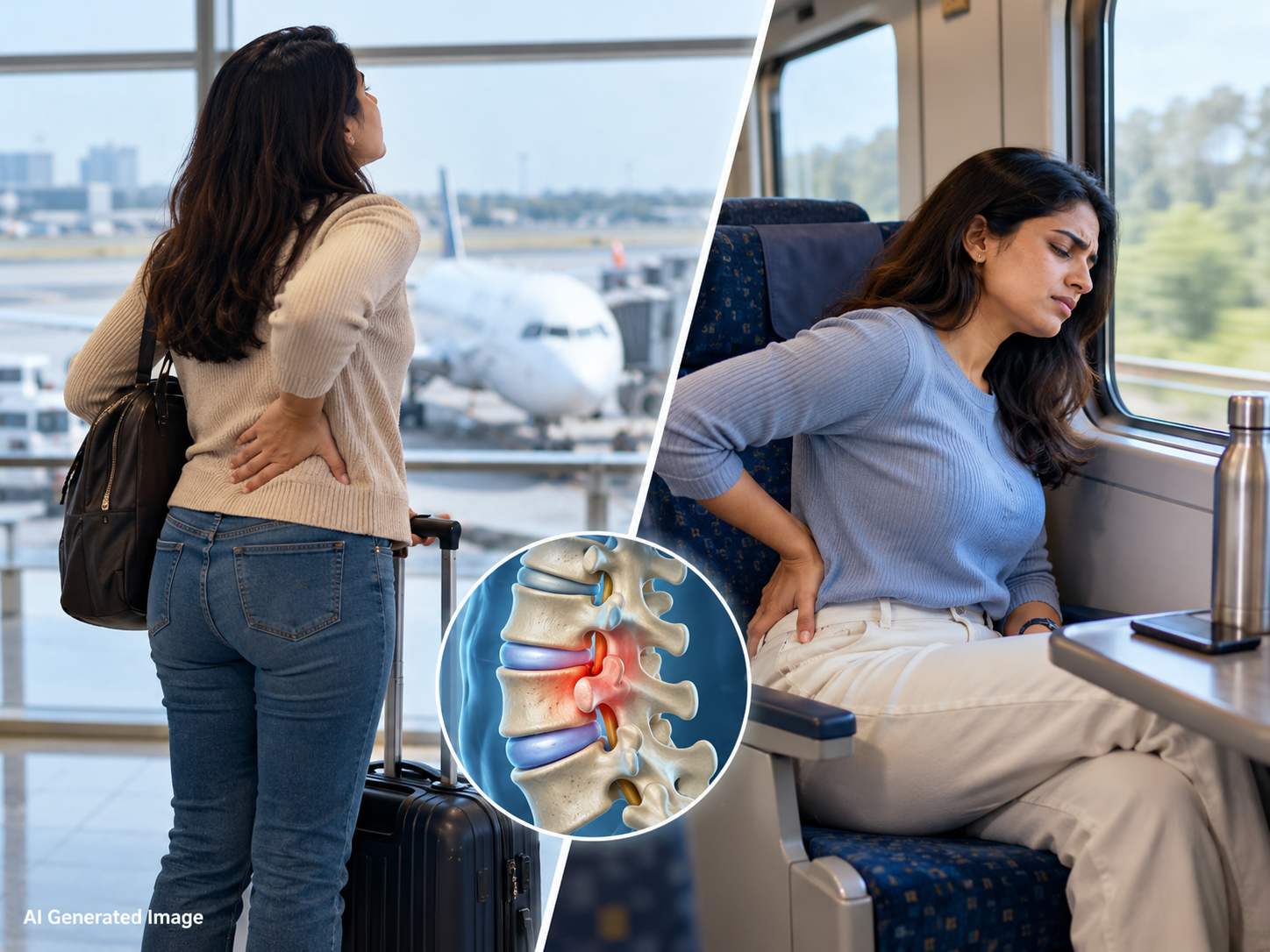
You have been told you have a slipped disc, and now a long journey is coming up. So, can you travel without worsening your condition? In most cases, you can, as long as your symptoms are stable and you take appropriate precautions. However, severe or worsening symptoms may require a medical assessment before you travel.
During long-distance travel with a slipped disc, prolonged sitting, poor posture, and lifting heavy luggage can aggravate discomfort. Understanding how to manage such back pain while travelling can help you plan your journey more safely.
What Happens to Your Slipped Disc During a Long Journey
Long transit times place extreme physical stress on your spine, which rapidly triggers severe lumbar disc herniation symptoms like shooting leg pain, numbness, and muscle weakness.
Why Sitting for Long Hours Aggravates Your Slipped Disc
- Pressure inside your discs rises sharply when you stay seated for hours.
- The lower spinal cushions get squeezed tightly, pushing the damaged inner disc material further outward.
- Constant nerve compression results directly from sitting for long hours, slipped-disc-style, on deep seats.
- Blood flow slows down in your core muscles, causing painful spasms and intense lower back stiffness.
How Vibration and Poor Posture Add to Your Back Pain
- Continuous road or cabin vibrations act as tiny, repetitive shocks that fatigue your spinal muscles.
- Slouching in unsupportive seats forces your spine out of its natural, healthy alignment during transit.
- This combined mechanical stress is the main cause of worsening slipped disc back pain while travelling.
- Micro-movements tear sensitive fibres around the disc, making the localised inflammation much more severe.
Travelling by Train With a Slipped Disc: What You Should Do
For a safe, comfortable train journey with a slipped disc, plan your seating, luggage handling, and movement routine.
Choose the Right Berth or Seat for Your Spine
- Book a lower berth to completely avoid the dangerous strain of climbing to upper levels.
- Maintain a gentle recline to keep the direct pressure off your sensitive lower back discs.
- Use a dedicated cushion to ensure proper, steady lumbar support during travel.
Boarding and Luggage: What You Should Avoid
- Never lift heavy bags because bending down can immediately rupture or aggravate your spinal discs.
- Avoid sudden twisting movements while navigating narrow train aisles and crowded boarding platforms.
- Hire a station porter or use a wheeled trolley to move your luggage safely without strain.
Walk and Stretch Regularly on Long Train Rides
- Walk down the aisle every hour to prevent severe stiffness during long-distance travel with a slipped disc.
- Perform gentle stretches approved by your doctor to keep your core muscles loose and relaxed.
- Change your sitting position frequently to stop constant, localised pressure building up in your spine.
Flying With a Slipped Disc: What You Need to Know
Knowing how to manage flight conditions, seating, and heavy bags is essential to avoid severe nerve pain when flying with a herniated disc.
Does Cabin Pressure Affect Your Slipped Disc?
Not directly.
- Prolonged immobility during flight causes natural fluid retention that increases mild disc swelling.
- Dehydration from dry cabin air reduces disc cushioning, increasing stiffness and localised ache.
Your Best Seat and Posture on a Flight
- Book an aisle seat for quick access to stand and walk.
- Use a specialised cushion to maintain proper spine alignment against flat, unsupportive aeroplane seats.
- Keep your knees bent at ninety degrees by using a small footrest to reduce lower back strain.
How to Handle Cabin Baggage and Airport Walking
- Avoid heavy lifting completely by checking in large bags and using luggage wheels for transit.
- Ask airport staff for assistance if walking long distances between gates triggers sharp leg pain.
- Take regular sitting breaks inside the terminal to actively manage worsening sciatica during travel.
How to Prepare Before Your Journey
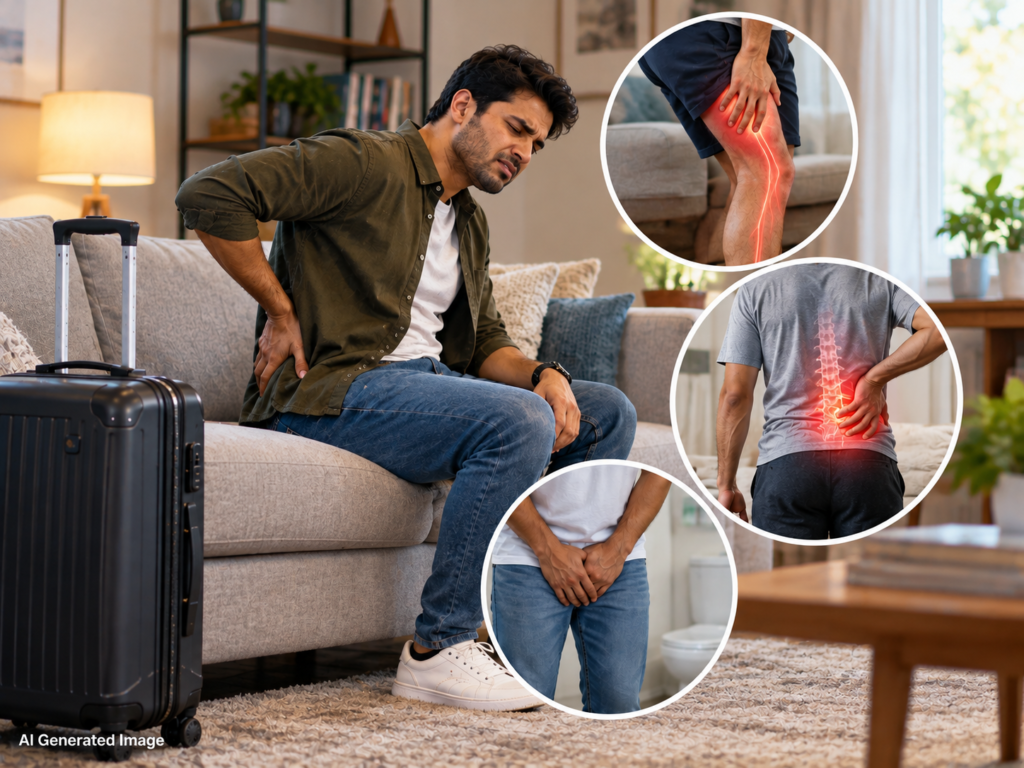
Preparing your spine beforehand helps you manage symptoms safely and prevent severe pain flare-ups during your trip.
Get Your Spine Checked Before You Book
- Schedule a medical checkup so your doctor can review your latest spinal imaging.
- Get explicit travel clearance from your treating physician before buying any travel tickets.
- Confirm your spine is stable enough to handle long periods of sitting and movement.
What You Should Pack in Your Travel Kit
- Pack a portable cushion to provide essential lumbar support during long flights and car rides.
- Bring all prescribed medications in your carry-on luggage for easy and immediate access.
- Include a portable pack that provides hot or cold therapy to soothe sudden stiffness.
Your Safe Movement Routine During Travel
- Perform doctor-approved stretches at regular intervals to keep your lower back loose.
- Move around every hour to help prevent slipped disc back pain on long trips.
- Avoid sudden twisting movements that can accidentally aggravate your spinal discs while in transit.
Warning Signs: When You Should Not Travel
Travelling can make back problems much worse. You must know the warning signs to stay safe and avoid permanent damage.
Red-Flag Symptoms You Should Never Ignore
- Severe lumbar disc herniation symptoms include a weak or numb leg.
- Nerves can get pinched in your lower spine when you sit too long.
- Loss of bladder or bowel control is an emergency that means nerves are trapped.
When Your Pain Worsens Despite Rest
- Sciatica during travel can become unbearable if the shooting pain does not stop.
- Rest should bring relief, but if the pain worsens, do not travel.
If your symptoms fail to improve, knowing when to see a spine specialist is critical before making any major travel plans.
When to Consult A Spine Surgeon
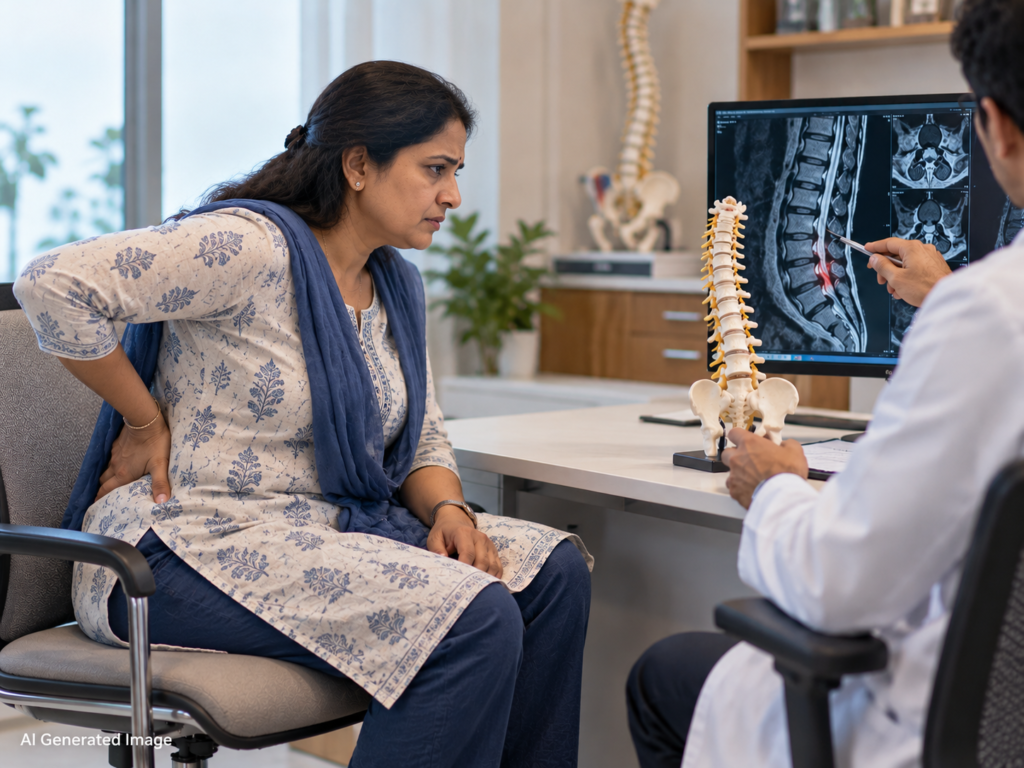
Get checked if you experience leg weakness, numbness, or loss of bladder control. Severe nerve compression caused by a disc injury requires fast specialist care to avoid permanent damage.
Slipped Disc Treatment in Kolkata: From Medication to Surgery
Explore your options early by checking advanced slipped disc treatment options for relief. Mild cases improve with targeted medication, physical therapy, and structured rest. Severe pain requires specialised treatment for slipped disc to restore mobility.
Minimally Invasive Spine Surgery for Your Faster Recovery
- Fix your spine safely using advanced MISS techniques.
- Smaller incisions mean less pain, lower risks, and a much faster recovery time.
- Never attempt to travel with slipped disc symptoms without clear medical approval
If you plan to travel with slipped disc symptoms, Dr Rohit Mishra, a spine surgeon in Kolkata, is available to discuss your symptoms, and appropriate precautions.
Check availability and timings!
FAQs
Can a slipped disc heal on its own without surgery?
Yes. Most slipped discs heal on their own within a few weeks or months as the body naturally absorbs the protruding disc material and spinal inflammation reduces.
How do you know if your slipped disc needs surgery?
Surgery may be considered for persistent disabling symptoms, significant nerve compression or progressive neurological deficits.
Is an MRI necessary to confirm a slipped disc?
Yes, it is the gold standard and most useful scan to confirm a slipped (herniated) disc, though it is not always immediately necessary for every initial episode of back pain
What is the difference between a slipped disc and sciatica?
A slipped disc is the actual spinal injury where a cushion bulges out. Sciatica is the resulting shooting leg pain caused when that bulge pinches the nerve.
How long does recovery take after slipped disc surgery?
Initial recovery takes about two to six weeks for light activities, while full healing of the surrounding tissues and return to heavy lifting requires three to six months.
Medical Disclaimer: This content is for educational purposes only and does not replace professional medical advice, diagnosis or treatment.